Event projects
Islamic Arts Biennale Jeddah: gallery visitor counting
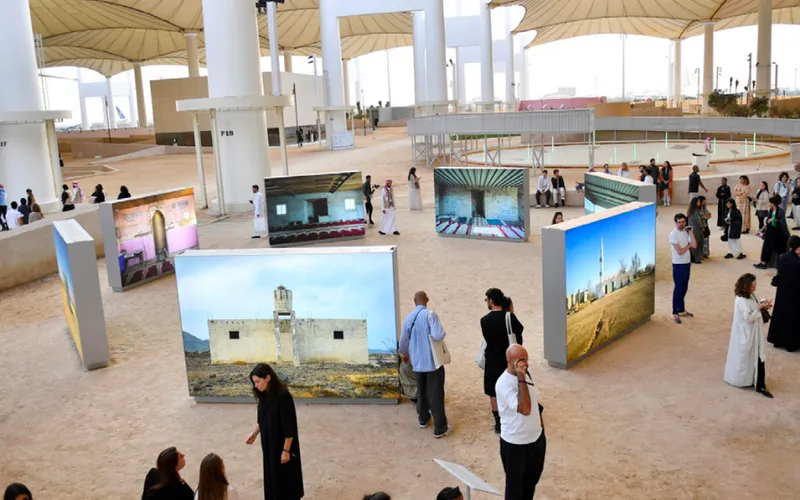
At the Islamic Arts Biennale in Jeddah, around 50 people-counting mats measured footfall across 5 galleries and 2 pavilions, for 1.5 million visitors over 4 months.
Updated 1 October 2026
Context
The Islamic Arts Biennale was held in Jeddah, Saudi Arabia, from 25 January to 25 May 2025. An exhibition spread across several galleries and pavilions raises a simple question: how many visitors enter each space, and when?
Setup
- Around 50 counting mats.
- 5 galleries and 2 pavilions equipped.
- 4 months of exhibition, from 25 January to 25 May 2025.
Results
- 1.5 million visitors over 4 months.
What it shows for museums and exhibitions
- Counting by space: equipping each gallery lets you track footfall room by room, not just at the main entrance.
- Discreet: the mat lies on the floor under a protective cover, with no ceiling camera and no changes to the building.
- No personal data: counting relies on footstep pressure, not on images of visitors.
- Duration: one system installed for the full run of a temporary exhibition.
Find out more
Planning an exhibition? Request a pilot.
Frequently asked questions
How many visitors did the Islamic Arts Biennale in Jeddah welcome in 2025?
The Biennale, open from 25 January to 25 May 2025, welcomed 1.5 million visitors over 4 months.
How many counting mats were installed at the Jeddah Biennale?
Around 50 people-counting mats, spread across 5 galleries and 2 pavilions.
Related reading
A museum visitor counter that needs no camera
A museum visitor counter for galleries and exhibitions: the discreet, modular Mat 2.0 mat, no cameras, no personal data, real-time visitor numbers for every equipped space.
→Counting mat or 3D camera: which should you choose?
Footfall camera (3D) or counting mat? Accuracy, privacy, installation and outdoor use: an objective comparison to help you choose the right people counting system.
→People counting and GDPR: what are your obligations?
Cameras, Wi-Fi, floor sensors: which people counting methods process personal data under the GDPR and Switzerland's nLPD, and which do not?
→A concrete need? Let's talk.
Describe your need in a few lines. We get back to you with a precise answer.